跳到内容
跳到内容 

The main reason fire pit paint peels is thermal shock. Standard high-temp paint is brittle and struggles to expand and contract with the metal. For B2B buyers looking for durability, High-Temperature Powder Coating is the superior choice because it creates a flexible, molecular bond with the steel that resists chipping, rust, and heat up to 600°C.
Let’s be real for a second—no one wants to deal with a customer calling six months after a purchase to complain that their expensive fire pit “looks like it’s been through a war.”
If you’re in the sourcing or outdoor retail game, you’ve probably seen it: that ugly, flaky rust that starts at the seams and spreads like a rash. Usually, the culprit is a cheap surface treatment.
The “Liquid Paint” Headache
In my years in the industry, I’ve seen a lot of factories cut corners by using standard high-temp liquid paint. It’s the “fast fashion” of the fire pit world. It looks great in the professional photos, but it’s just not built for the long haul.
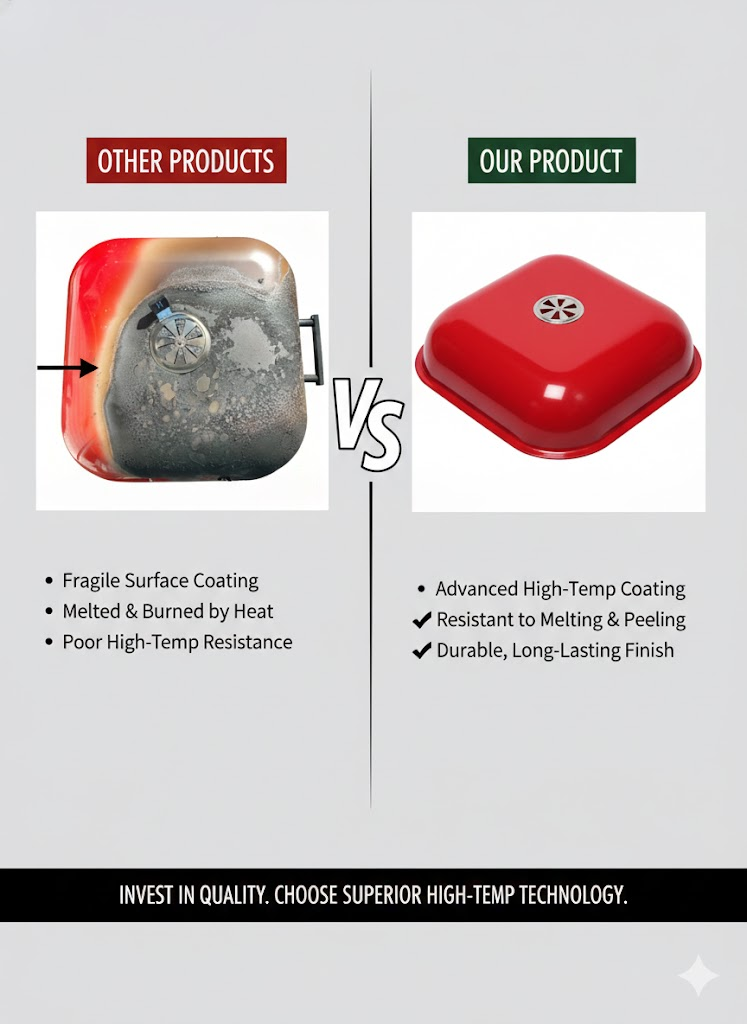
Standard paint essentially “sits” on top of the metal. When the fire gets hot, the steel expands. The paint? It’s too stiff to move, so it cracks. Once those tiny cracks appear, moisture gets in, and it’s game over—the paint peels, and the rust starts eating the steel.
Why We Swear by Powder Coating
If you check out that comparison photo (the one with our product on the left vs. the competitor), you’ll see what a difference a real High-Temp Powder Coating makes.
Instead of a wet spray, we use electrostatically charged powder that’s baked onto the metal. It’s like a second skin.
- It actually “breathes”: It can handle the heat cycles of a fire pit without cracking.
- It’s tough as nails: It’s way harder to scratch during shipping or assembly (which means fewer “damaged on arrival” complaints for you).
- It looks premium: It has a texture and depth that cheap paint just can’t replicate.
A Quick Reality Check for Buyers
When you’re looking at quotes from different suppliers, don’t just look at the bottom line. If the price seems too good to be true, they’re probably saving money on the finish.
Here’s a pro tip: Ask your supplier for a Cross-Hatch Adhesion Test or their Salt Spray Test results. If they hesitate or give you a blank stare, you know they’re using the cheap stuff.
In this business, you either pay for quality once, or you pay for returns and a damaged reputation forever. We prefer to do it right the first time.